Hey there! Ever think cartoons are just for kids? Time to change that mindset! While animated shows and comic strips have brought laughter to our lives, they’re also significant players in triggering conversations about our social climate. Cartoons depict social issues in a way that’s approachable, colorful, and highly impactful. They break down complex societal problems into digestible pieces, often making them more relatable and understandable. Who would have thought that those colorful characters could hold so much power? By addressing topics like inequality, political corruption, environmental issues, and more, these cartoons grab our attention and make us think, “Whoa, that’s deep!” So, buckle up as we dive into the world of cartoons depicting social issues and discover how they’re reshaping the way we approach critical discussions.
Read Now : Historical Incidents In Animation
The Power of Cartoons in Social Commentary
Cartoons have a unique magic in capturing the essence of societal issues. Have you ever noticed how a single panel can say more than a thousand-word article? They cut through the noise and hit us right where it matters. With their humorous yet pointed commentary, cartoons depicting social issues provoke thought and inspire action. They seamlessly blend entertainment with advocacy, making us question our biases, triggering discussion among friends, family, and even policymakers. Whether it’s a political cartoon critiquing government policies or an animated series highlighting climate change, they strip away the complexities and offer a fresh view—a much-needed wake-up call in a world often saturated with mind-numbing information. Next time you come across a cartoon like this, take a moment to reflect. They’re not just about giggles; they’re a battle cry for change!
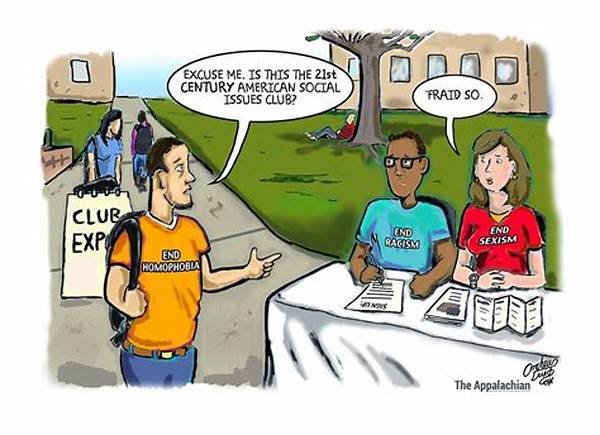
Imagine this: a single cartoon strip can tackle deeply rooted issues like racism or gender inequality, creating a ripple effect in society. These art warriors have the power to bring marginalized voices to the forefront, challenging stereotypes and promoting understanding. As viewers, we get a crash course in empathy, thanks to these cartoons depicting social issues. They plant vital seeds of change in the minds of viewers, using humor and satire as their secret weapon. So, next time you find yourself chuckling at a cartoon that hits a little too close to home, remember, it’s doing its job—informing, challenging, and pushing for a better world!
How Cartoons Educate and Inspire Change
1. Relatability: Cartoons depicting social issues create characters and scenarios we can see ourselves in, making it hard to ignore the message.
2. Simplification: They break down complex issues into understandable snippets, providing clarity in chaos.
3. Accessibility: Accessible to all age groups, cartoons transcend barriers of age and education.
4. Humor with Depth: Using satire and humor, they convey serious themes without losing the audience’s interest.
5. Action-Oriented: They inspire us to take action, urging us not just to watch but to participate in change.
The Evolution and Impact of Cartoons
Cartoons have come a long way from being a source of mere entertainment. They’ve evolved into a powerhouse of social commentary. From political cartoons in newspapers to animated films addressing mental health, cartoons depicting social issues have left a significant mark on our culture. Remember how Disney’s “Zootopia” cleverly tackled prejudice and discrimination? It wasn’t just a kids’ movie; it was a mirror reflecting societal flaws, sparking conversations among all age groups.
Social media, too, plays a role in amplifying the reach of these cartoons. With a single click, a cartoon can go viral, engaging millions worldwide. It’s how cartoons depicting social issues have transcended traditional media, making their way into online platforms and becoming an influential tool in activist movements. In essence, they’re pushing boundaries, challenging norms, and reshaping perceptions, proving that cartoons are indeed the unsung heroes of social change.
The Role of Humor in Cartoons
1. Humor acts as a bridge, connecting serious topics with lighter tones.
2. It disarms the audience, making tough topics approachable.
3. Through humor, cartoons can critique without alienating.
4. It offers a fresh perspective on well-tread issues.
Read Now : Iconic Cartoons With Anime Influence
5. Engaging humor encourages discussions and sharing.
6. Humor captures and retains attention longer.
7. It can dismantle defenses, encouraging openness.
8. Provides a safe space to explore uncomfortable truths.
9. Reinforces memory retention of the issue discussed.
10. Encourages continuous engagement with the subject matter.
Cartoons as Agents of Change in Society
Think of cartoons as the dynamic change-makers of our society. Their ability to distill complex ideas into entertaining yet educational pieces is unparalleled. Cartoons depicting social issues force us to revisit, reassess, and sometimes redefine our viewpoints. School curriculums could incorporate these cartoons, paving the way for broader discussions on ethics, tolerance, and diversity. As we follow these colorful narratives, we’re prompted to confront societal ills we might have ignored otherwise.
Imagine students learning about social justice through thoughtful cartoons that ignite passion rather than leaving them disengaged. Or communities using cartoons in open spaces to initiate dialogues that prioritize empathy over hostility. Indeed, cartoons depicting social issues hold the potential to transform apathy into action, ignorance into insight. They’re the non-traditional educational tools this new age demands. Don’t sleep on them; they’re paving the way for tomorrow’s socially conscious generation. We would be wise to embrace and amplify their voices.
Conclusion: The Ever-Growing Influence of Cartoons
In wrapping up, let’s remind ourselves of the critical role cartoons play in influencing social consciousness. Their impact is immense and undeniable. Cartoons depicting social issues challenge our thinking, engage our emotions, and inspire action. They’re instrumental in altering perceptions, questioning norms, and ultimately advocating for a progressive society.
These animated art forms are much more than child’s play; they’re cultural reflections that should not be underestimated. So next time you see a cartoon targeting those social justice nerves, pause, and appreciate the brilliance behind it. Identify the message, discuss it, and spread it. Let’s champion these vibrant vessels of change and ensure that cartoons depicting social issues continue to thrive and impact generations to come.